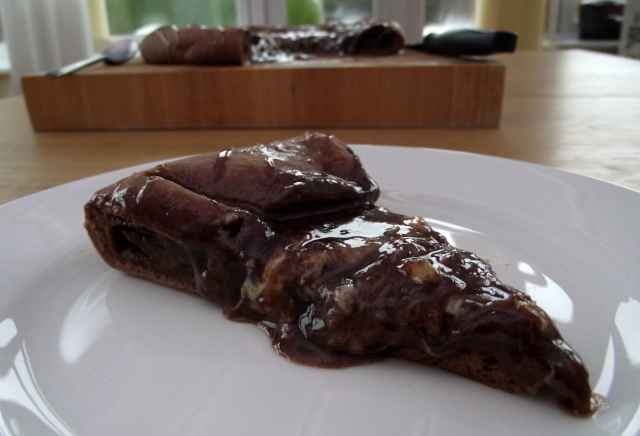
Makes : 1 x 29cm round pizza
Ingredients
- 100g shop-bought Gü Chocolate Ganache (I used Love N Bake Schmear Chocolate Filling)
- 2 tsp active dried yeast
- 250g plain flour (I used bread flour)
- 2 tbsp cocoa powder
- 1 tsp salt
- 3 tbsp olive oil, plus a trickle more
- 1 tbsp unsalted butter, melted
I did not use these:
- 6 tbsp double cream
- 50g dark, milk or white chocolate, or a mixture of all three, finely chopped
- 2 tbsp toasted hazelnuts, roughly chopped
- 1 tbsp dark brown sugar
This is what I used:
chocolate sauce
Caramel
- 2cupsgranulated sugar
- 1cupheavy cream
- pinchtable salt
- 2tablespoonsunsalted butter cold
- 3tablespoonsdark rum
- (Makes about 2 cups), 2X more than you need
Equipment
Food processor
Piping bag fitted with a 1cm piping nozzle
Method
Step 1: Pour 150ml of warm water into a small bowl, sprinkle with the yeast and leave to stand for about 5 minutes or until the yeast dissolves and starts to bubble.
Step 2: Tip the flour, cocoa powder and salt into a food processor. Trickle in the oil and, with the machine running, pour in the yeast mixture and blend just until a dough forms. Turn the dough out onto a lightly floured surface (don’t add too much flour here), and knead for only about a minute or until smooth.
Step 3: Drop the dough into a large bowl, add a trickle of oil and turn the dough to coat. Cover and set aside in a warm, draft-free area for about an hour until the dough doubles in size.
Step 4: Preheat the oven to 220°C/Gas mark 7 and place a baking sheet in to heat up to help to give your pizza a crispier base. Punch down the dough to remove any excess air (the perfect time to get rid of any excess frustration), and make it into a neat ball.
Step 5: Roll out the dough on a lightly floured work surface to a 33cm circle. Fill your piping bag (or plastic bag) with the ganache, if using, and pipe a thin sausage all around the dough base, leaving a 2cm gap at the outside edge.
Step 6: Brush a little water onto the dough around the inside of the ganache to dampen it, and roll over the outside of the dough, but not too tightly, to enclose the ganache. Press the inside edge to seal tightly.
Step 7: Remove the hot baking tray from the oven and slide the dough base onto it. Brush all over the melted butter and prick the centre lightly with a fork. Then bake for 10-15 minutes or until the edges are starting to brown and the centre is crispy.
Step 8: Drizzle the centre with the cream, scatter with the chopped chocolate and nuts and sprinkle with the sugar. Put back in the oven for a minute, just to warm and melt the topping. I spread my chocolate sauce and caramel and then rewarmed it)
Gü Tip
Use the raw dough straight away or at the end of Step 2 wrap it in cling film and keep it in the fridge until the next day. Just punch it down again and use as above.
Chocolate sauce:
If your kitchen is cool and the ganache becomes too cold and stiff to spread, set the bowl over a saucepan containing simmering water, then stir briefly until smooth and icinglike.
Microwave cream and butter in measuring cup on high until bubbling, about 1 1/2 minutes. (Alternatively, bring to simmer in small saucepan over medium-high heat). Place chocolate in bowl of food processor fitted with steel blade. With machine running, gradually add hot cream and cognac through feed tube and process until smooth and thickened, about 3 minutes. Transfer ganache to medium bowl and let stand at room temperature 1 hour, until spreadable (ganache should have consistency of soft icing).
Caramel:
If you don’t own a candy thermometer, spot-check the sugar syrup with an instant-read thermometer that can read temperatures in excess of 350 degrees. Otherwise, follow the time approximations in the recipe and watch the color of the sugar syrup; it should be a deep amber color before the cream is added. To keep the sauce from clumping, make sure the cream is hot before adding it to the sugar syrup; try to coordinate it so that the cream reaches a simmer when the sugar syrup reaches 350 degrees.
- Pour 1 cup water into 2-quart heavy-bottomed saucepan; add sugar to center of pot to keep granules from adhering to sides of pot. Bring to boil over high heat, covered. Uncover pot, insert candy thermometer, and continue to boil until syrup is thick and straw-colored, registering 300 degrees on candy thermometer, about 15 minutes. Reduce heat to medium; continue to cook until sugar is deep amber, begins to smoke, and registers 350 degrees on candy thermometer, about 5 minutes longer. Meanwhile, when temperature of syrup reaches 300 degrees, bring cream and salt to simmer in small, heavy-bottomed saucepan over high heat. (If cream reaches simmer before syrup reaches 350 degrees, remove cream from heat and set aside.)
- Remove sugar syrup from heat. Pour about one quarter of hot cream into sugar syrup; let bubbling subside. Add remaining cream; let bubbling subside. Whisk gently until smooth; whisk in butter and dark rum. Let cool until warm; serve. (Can be covered and refrigerated up to 1 month; reheat in microwave or small saucepan over low heat.)