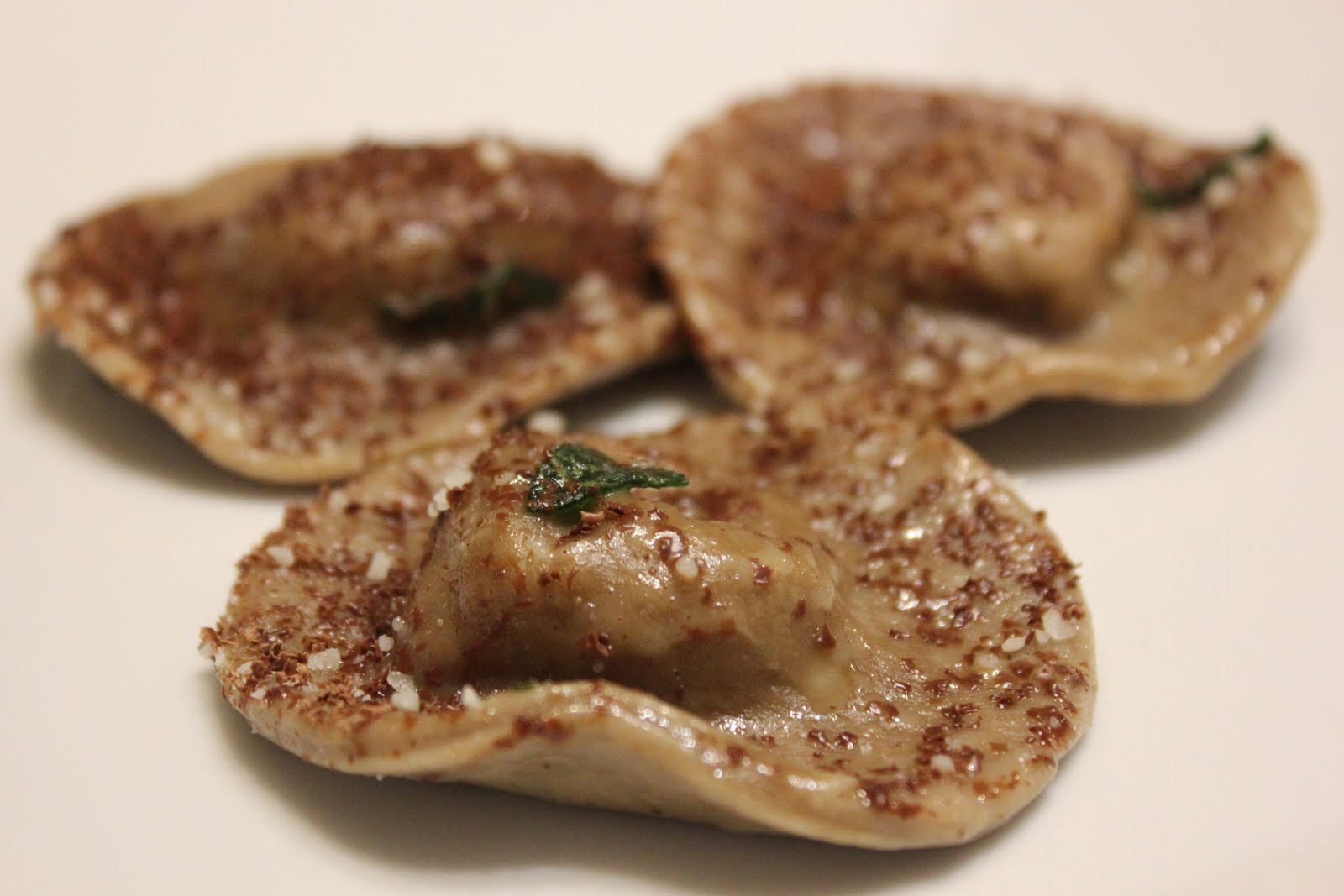
Makes 4 servings (or with lots of extra filling)
Ingredients
- 1 small to medium butternut squash (about 2 1/2 pounds)
- 2 tablespoons dark molasses
- 2 tablespoons unsalted butter
- 2 teaspoons balsamic vinegar
- 1/4 cup mascarpone cheese (I used ricotta)
- 2 tablespoons freshly grated Parmesan
- 1/4 teaspoon ground cinnamon
- 1/4 teaspoon freshly grated nutmeg
- Gray salt and freshly ground pepper
- Ravioli dough or 3/4 pound sheet pasta purchased from local Italian delicatessen
- Flour, for dusting board
- 4 tablespoons sweet butter
- 8 fresh sage leaves
- 2 ounces Parmesan, for grating
- 2 ounces bittersweet chocolate, for grating
Directions
- Preheat oven to 375 degrees F.
- Cut squash in 1/2 and scrape out seeds. Spread 1 tablespoon molasses in the cavity. Season with salt and pepper. Place cut side down on a roasting pan. Cook in the oven until very soft, about 1 hour. (See Chef’s Notes.)
- Let cool to room temperature and scoop out flesh into the work bowl of a food processor.
- Puree squash until smooth, then spread on a baking sheet and return to the 375 degree oven to dry, about 10 minutes. The consistency will be like mashed potatoes. Scrape into a large mixing bowl.
- Heat the butter in a saucepan over medium-low heat until it begins to brown. Immediately remove from heat and add remaining 1 tablespoon molasses and all the vinegar. Add to squash with mascarpone, Parmesan, cinnamon, and nutmeg. Season, to taste, with salt and pepper and mix well. The recipe can be made ahead to this point (makes 2 cups filling,) Cover well and refrigerate 4 hours or up to 2 days.
- To fill the raviolis: Lay out a sheet of pasta dough on a lightly floured board. Cut into circles with a 3 1/2 inch pastry cutter. Put 1 tablespoon squash filling in the center of 1/2 the rounds using either a pastry bag or a small spoon. Leave a 1/2-inch border all around the filling. Moisten borders with water and top with remaining rounds of dough. Press all the air out and seal firmly by pressing all around with fingertips. Lay raviolis out to dry on a lightly floured board or baking sheet and lightly flour the tops. Repeat until you run out of dough and/or filling. To cook, boil in lightly salted water until tender, about 3 minutes. Reserve 2 ounces of the cooking water.
- Uncooked, filled raviolis may be used immediately or frozen for 2 months. Lay them out on sheet pans and place in freezer until frozen. Transfer to plastic bag.
- For the Sage Brown Butter: While raviolis are cooking, in a large saute pan, melt the butter with the sage and a pinch of salt until it foams and becomes light brown. Reserve.
- On medium heat toss the cooked raviolis in the sage butter then transfer to a serving platter or dishes. Add 2 ounces of the cooking water to the pan and swirl with any residual butter. Spoon the butter sauce over the raviolis, then finish with a generous grating of Parmesan and bittersweet chocolate
- Dough recipe (Tyler Florence)
http://www.foodnetwork.com/recipes/tyler-florence/pasta-dough-for-ravioli-recipe/index.html
Ingredients
2 cups all-purpose flour, plus more for dusting
1 teaspoon salt
3 large eggs, plus 1 for egg wash
2 tablespoons extra-virgin olive oil
1 tbsp cocoa (my addition)
Cornmeal, for dusting - Directions
To make the pasta dough: In an electric mixer fitted with a dough hook*, combine the flour and salt. Add the eggs, 1 at a time, and continue to mix. Drizzle in 1 tablespoons of the olive oil and continue to incorporate all the flour until it forms a ball. Sprinkle some flour on work surface, knead and fold the dough until elastic and smooth, this should take about 10 minutes. Brush the surface with the remaining olive oil and wrap the dough in plastic wrap; let rest for about 30 minutes to allow the gluten to relax. - *Alternatively if you don’t have an electric mixer: Combine the flour and salt on a flat work surface; shape into a mound and make a well in the center. Add the eggs and 1 tablespoon of the olive oil to the well and lightly beat with a fork. Gradually draw in the flour from the inside wall of the well in a circular motion. Use 1 hand for mixing and the other to protect the outer wall. Continue to incorporate all the flour until it forms a ball. Continue as directed above.
- Cut the ball of dough in 1/2, cover and reserve the piece you are not immediately using to prevent it from drying out. Dust the counter and dough with a little flour. Press the dough into a rectangle and roll it through a pasta machine, 2 or 3 times, at widest setting. Pull and stretch the sheet of dough with the palm of your hand as it emerges from the rollers. Reduce the setting and crank the dough through again, 2 or 3 times. Continue tightening until the machine is at the narrowest setting; the dough should be paper-thin, about 1/8-inch thick (you should be able to see your hand through it.). Dust the sheets of dough with flour as needed.
- Beat 1 egg with 1 tablespoon of water to make an egg wash. Dust the counter and sheet of dough with flour, lay out the long sheet of pasta, and brush the top surface with the egg wash, which acts as a glue. Drop tablespoons of your favorite filling on 1/2 of the pasta sheet, about 2-inches apart. Fold the other 1/2 over the filling like a blanket. With an espresso cup or fingers, gently press out air pockets around each mound of filling. Use a sharp knife to cut each pillow into squares and crimp the 4 edges with the tins of a fork to make a tight seal. Dust the ravioli and a sheet pan with cornmeal to prevent the pasta from sticking and lay them out to dry slightly while assembling the rest.
- Cook the ravioli in plenty of boiling salted water for 4 minutes; they’ll float to the top when ready, so be careful not to overcrowd the pot. Lift the ravioli from water with a large strainer or slotted spoon. Bath the ravioli in your favorite sauce to lightly coat and serve.